Welcome To Our Company!


 Send Inquiry
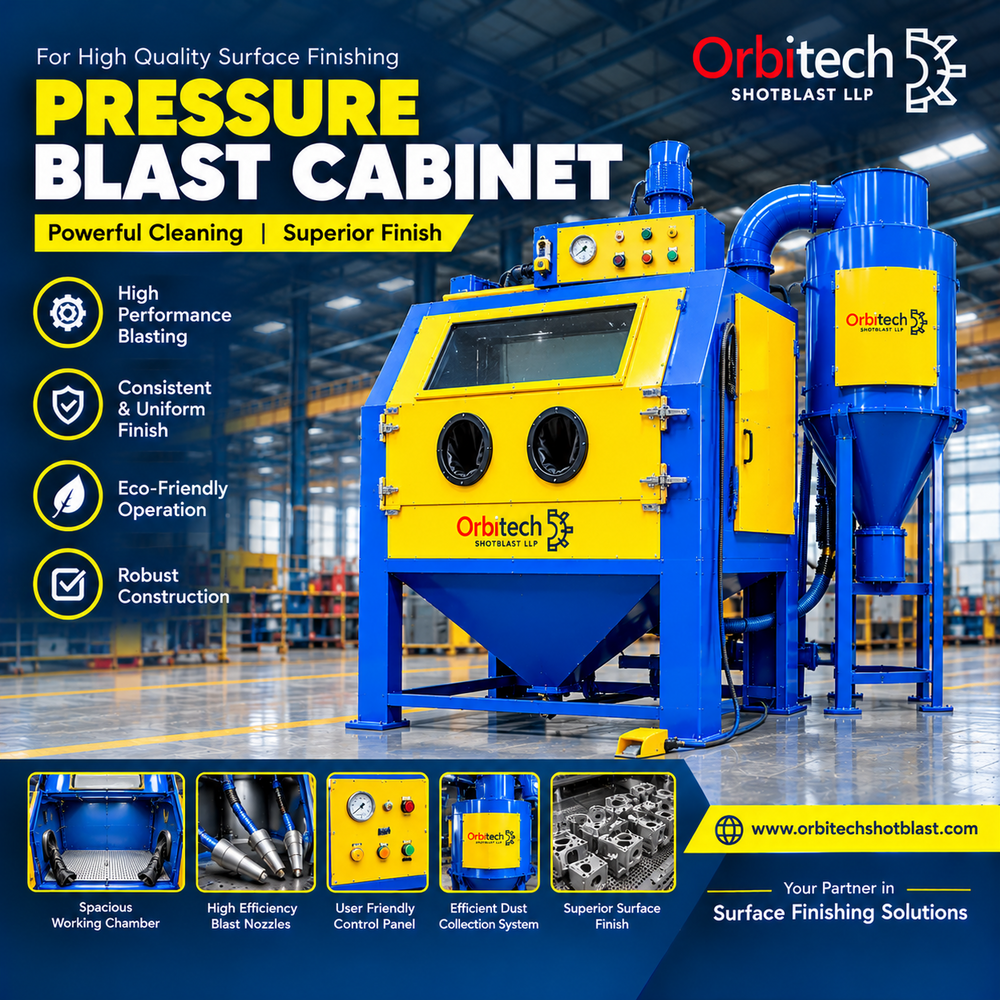
Pressure Blast Cabinet
Price 300000.00 INR/ Piece
MOQ : 1 Piece
Pressure Blast Cabinet Specification
- Motor Type
- Electric
- Capacity
- 200 liters
- Dimension (L*W*H)
- 1200 mm x 900 mm x 1800 mm
- Weight
- 350 kg
- Power
- 3 HP
- Voltage
- 415 V
- Design
- Pressure blast cabinet with internal lighting and dust collector
- Control Panel
- Push Button / PLC based controls
- Operation Type
- Automatic / Manual
- Material
- Mild Steel
- Cabinet Finish
- Powder Coated
- Lighting
- LED Illuminated Workspace
- Dust Collector Type
- Cyclone Separator with Reusable Filter
- Media Compatibility
- Suitable for Glass Beads, Aluminum Oxide, Grit, Sand
- Blast Nozzle Material
- Tungsten Carbide
- Noise Level
- Below 85 dB(A)
- Visibility
- Large Viewing Window with Safety Glass
Pressure Blast Cabinet Trade Information
- Minimum Order Quantity
- 1 Piece
- Supply Ability
- 10 Pieces Per Month
- Delivery Time
- 1 Months
- Packaging Details
- Standard Packaging
- Main Export Market(s)
- Western Europe, Australia, North America, Eastern Europe, Middle East, Central America, Africa, South America, Asia
- Main Domestic Market
- All India
About Pressure Blast Cabinet
Pressure Blast Cabinet Manufacturer in India
High-Performance Abrasive Blasting for Industrial Cleaning and Surface Finishing
Orbitech Shotblast LLP is a manufacturer and supplier of industrial shot blasting and abrasive blasting equipment in India, offering pressure blast cabinets for metal cleaning, rust removal, paint stripping, deburring and surface preparation. Designed for workshop and manufacturing environments, a pressure blast cabinet uses a pressurized abrasive delivery system to propel blasting media through a nozzle at high velocity, helping remove stubborn surface contaminants and prepare components for subsequent finishing operations.
A pressure blasting cabinet is particularly useful when conventional cleaning methods or suction-type blasting systems do not provide the required material removal rate or surface preparation performance. By delivering abrasive from a pressurized vessel, the system provides effective blasting action for suitable metal components, intricate parts, castings, fabricated products and engineering workpieces.
At Orbitech Shotblast LLP, we offer industrial surface preparation solutions for manufacturers, engineering workshops, foundries, fabrication units, automotive component producers and metal finishing facilities. Our pressure blast cabinet can be selected according to the component dimensions, material, contamination level, abrasive requirements and production objectives.
Businesses searching for a Pressure Blast Cabinet Manufacturer in India, Pressure Blast Cabinet Supplier, or Industrial Pressure Blasting Cabinet can contact Orbitech to discuss the appropriate equipment configuration for their application.
What Is a Pressure Blast Cabinet?
A pressure blast cabinet is an enclosed abrasive blasting machine that uses compressed air and a pressurized abrasive vessel to deliver blasting media through a hose and nozzle. The operator places the component inside the cabinet and directs the abrasive stream towards the surfaces requiring treatment.
The abrasive particles impact the workpiece to remove rust, paint, scale, dirt, surface deposits and other unwanted materials. Depending on the abrasive type and operating conditions, the process can also produce a suitable surface profile for painting, coating, bonding or other finishing operations.
Unlike a suction blast cabinet, which draws abrasive into the air stream through a suction mechanism, a pressure blast cabinet uses a pressure vessel to feed abrasive into the delivery system. This direct-pressure arrangement is well suited to applications requiring a stronger blasting action or higher cleaning productivity.
The enclosed design helps contain abrasive and debris during operation, while a properly selected dust collection system removes airborne particles generated during the process.
Working Principle of a Pressure Blast Cabinet
The pressure blast cabinet operates through the controlled delivery of abrasive media under compressed-air pressure.
- Workpiece placement: The component is positioned inside the enclosed blasting chamber and arranged for convenient access to the required surfaces.
- Abrasive loading: Compatible abrasive media is loaded into the pressure vessel according to the machine's operating procedure.
- Pressure generation: Compressed air pressurizes the abrasive delivery vessel and establishes the operating conditions specified for the system.
- Abrasive metering: A suitable metering arrangement regulates the abrasive flow into the compressed-air stream.
- Blasting operation: The abrasive travels through the blast hose and nozzle and strikes the workpiece at the required angle and intensity.
- Surface treatment: The abrasive impact removes unwanted deposits or creates the specified surface texture.
- Dust extraction and recovery: Dust is extracted through the dust collection system, while recoverable abrasive is collected and reused where the system design permits.
- Inspection and unloading: The operator inspects the treated component and removes it after the required surface condition has been achieved.
Operating pressure, abrasive flow, nozzle size, blasting distance and treatment time should be adjusted according to the workpiece material and desired finish.
Key Features of Orbitech Pressure Blast Cabinet
Direct-Pressure Abrasive Delivery
The pressure vessel feeds abrasive into the blasting line, supporting effective cleaning of surfaces that require a more intensive blasting action.
Enclosed Blasting Chamber
The cabinet contains the blasting process and helps prevent abrasive particles and debris from spreading into the surrounding workspace.
Large Viewing Window
A wide viewing window with safety glazing allows the operator to observe the component during blasting. The viewing panel should be maintained and replaced when its protective condition deteriorates.
Integrated Workspace Lighting
Internal LED lighting, where provided, improves visibility while treating intricate surfaces, corners and small engineering components.
Dust Collection System
A dust extraction arrangement with a cyclone separator and reusable filter, according to the selected configuration, helps collect dust and support abrasive recovery.
Tungsten Carbide Blast Nozzle
The published configuration specifies a tungsten carbide nozzle, a wear-resistant option for abrasive blasting applications. Nozzle condition and wear should be checked periodically.
Operator Controls
Push-button controls, foot-pedal operation or PLC-based controls may be selected according to the machine configuration. The operating arrangement should allow safe control of the blasting cycle.
Abrasive Compatibility
The cabinet can be configured for suitable media such as glass beads, aluminium oxide and compatible abrasive grits. Media selection depends on the material being treated, the required finish and the machine manufacturer's recommendations.
Industrial Construction
The published model uses a mild-steel cabinet with a powder-coated exterior. Internal wear protection should be selected according to abrasive type and operating intensity.
Application-Specific Configuration
The cabinet dimensions, pressure vessel, nozzle arrangement, dust extraction and controls should be matched to the intended workload and available compressed-air supply.
Advantages of a Pressure Blast Cabinet
1. Efficient Removal of Stubborn Contaminants
Direct-pressure blasting can provide effective removal of rust, scale, old coatings and other difficult surface deposits when the abrasive and operating settings are correctly selected.
2. Higher Blasting Productivity for Suitable Applications
Pressure-fed abrasive delivery can increase cleaning productivity compared with suction systems in appropriate applications. Actual results depend on the component, nozzle, media, pressure and air supply.
3. Improved Surface Preparation
The process can prepare metal surfaces for painting, protective coatings, bonding and other downstream manufacturing operations.
4. Better Access to Complex Surface Features
The operator can direct the nozzle towards recesses, edges and irregularly shaped areas that may be difficult to treat using conventional cleaning methods.
5. Controlled Treatment of Individual Components
Parts can be positioned and treated individually, allowing the operator to focus on specific surfaces and adjust the blasting technique to the workpiece.
6. Reduced Abrasive Waste With Suitable Recovery
Where an appropriate recovery system is installed, reusable abrasive can be collected and recirculated, helping reduce media consumption.
7. Cleaner Blasting Workspace
The enclosed chamber and correctly sized dust collector help contain abrasive and manage airborne dust. Proper maintenance and suitable workplace ventilation remain essential.
8. Versatile Surface Finishing Applications
With appropriate abrasive selection and operating parameters, the cabinet can support cleaning, deburring, coating removal, surface texturing and other finishing requirements.
9. Compact Workshop Installation
A cabinet-style machine can provide a dedicated blasting station without requiring the larger working area associated with a full-size blasting room, subject to the installation layout.
10. Repeatable Processing Procedures
Standardized settings for abrasive, pressure, nozzle movement and treatment time can help operators achieve more consistent results across comparable workpieces.
Industrial Applications of Pressure Blast Cabinet
A pressure blast cabinet is suitable for applications where components require controlled abrasive treatment inside an enclosed workspace.
- Automotive components: Cleaning suitable metal parts, brackets, housings and engine-related components before finishing.
- Foundry operations: Removing adhering sand, scale and other deposits from compatible castings.
- Forging industries: Removing oxide scale from suitable forged components before subsequent processing.
- General engineering: Cleaning metal components and removing unwanted surface deposits.
- Fabrication workshops: Preparing compatible metal parts for painting, coating and further assembly.
- Tool and die maintenance: Cleaning suitable tools, fixtures and metal tooling components.
- Pump and valve manufacturing: Preparing compatible metal housings and components for inspection or finishing.
- Machining operations: Removing selected surface residues and burrs where abrasive treatment is appropriate.
- Surface finishing units: Creating the specified surface texture before protective coating or bonding.
- Maintenance and refurbishment: Removing old paint, corrosion and surface contamination from suitable parts.
The abrasive method must be selected carefully for precision-machined parts, thin sections, soft metals and components with critical tolerances. Blasting can alter surface roughness and dimensions if unsuitable settings are used.
Types of Pressure Blast Cabinets Available
Pressure blast cabinets can be configured in several ways to suit different workpiece sizes, operating methods and production requirements. The following are common configuration categories to discuss with Orbitech.
1. Manual Pressure Blast Cabinet
The operator controls the blasting nozzle manually while viewing the workpiece through the cabinet window. This configuration is suitable for varied component shapes and smaller production batches.
2. Foot-Pedal-Controlled Pressure Blast Cabinet
A foot pedal enables the operator to initiate or stop the blasting cycle while keeping both hands available to control the nozzle and workpiece.
3. PLC-Controlled Pressure Blast Cabinet
Where offered, PLC-based controls can support defined operating sequences and improve process control for repeatable applications.
4. Heavy-Duty Pressure Blast Cabinet
Designed around suitable larger or more demanding workpieces, with the cabinet structure, grate, pressure vessel and handling arrangement selected for the intended load.
5. Precision Finishing Pressure Blast Cabinet
Configured for controlled abrasive treatment of smaller or intricate parts, using compatible media and carefully selected operating parameters.
6. Pressure Blast Cabinet With Dust Collection
Combines the blasting enclosure with a suitable dust extraction and filtration system to manage airborne contaminants and support the intended operating process.
7. Customized Industrial Pressure Blast Cabinet
An application-specific configuration can be considered when the workpiece dimensions, media, production rate or material handling requirements differ from a standard arrangement.
Availability of each configuration, its control system and any customization should be confirmed with Orbitech before placing an order.
Pressure Blast Cabinet Specifications
The following specifications reflect the details published on Orbitech's current product listing for the listed model.
| Parameter | Published specification |
| Product name | Pressure Blast Cabinet |
| Machine design | Enclosed pressure blast cabinet with internal lighting and dust collector |
| Material | Mild steel |
| Approximate dimensions (L W H) | 1200 900 1800 mm |
| Published capacity | 200 litres |
| Published machine weight | 350 kg |
| Motor power | 3 HP |
| Electrical supply | 415 V |
| Dust collection | Cyclone separator with reusable filter |
| Viewing window | Large window with safety glass |
| Internal lighting | LED illumination |
| Controls | Push-button / PLC-based, as configured |
| Blast nozzle | Tungsten carbide |
| Media compatibility | Glass beads, aluminium oxide and compatible grit |
| Applications | Surface cleaning, deburring, peening and paint removal |
| Operation | Manual / automatic, depending on configuration |
| Published listed price | 3,00,000 per piece; confirm current quotation |
Important specification note: The listed 200-litre capacity should be confirmed with the manufacturer to establish whether it refers to the abrasive vessel or another system capacity. Electrical power and supply requirements, compressed-air consumption, operating pressure, filtration performance and actual production capacity should be verified in the approved technical datasheet.
Why Choose Orbitech Shotblast LLP?
Orbitech Shotblast LLP is an industrial shot blasting equipment manufacturer and supplier based in Vadodara, Gujarat, India.
Selecting a pressure blast cabinet requires consideration of more than the initial machine price. The abrasive delivery mechanism, compressed-air demand, nozzle wear, dust collection, cabinet accessibility and compatibility with the workpiece all affect the suitability of the equipment.
Orbitech offers a range of industrial shot blasting and surface preparation machines for manufacturing and engineering applications. Buyers can discuss the appropriate machine configuration based on their component material, contamination level, production volume and required surface condition.
Reasons to consider Orbitech include:
- Focused product expertise: Equipment for industrial abrasive blasting and surface preparation.
- Application-based selection: Machine configuration matched to workpiece dimensions, material and cleaning requirements.
- Industrial design options: Suitable cabinet construction, abrasive delivery and dust collection arrangements.
- Flexible equipment configurations: Options for different operating and control requirements, subject to availability.
- Multiple blasting technologies: A broader portfolio that helps buyers evaluate alternative surface preparation methods.
- Quotation support: Technical discussions to identify a suitable configuration before purchasing.
Orbitech aims to be a preferred Pressure Blast Cabinet Manufacturer and Supplier in India by offering application-oriented industrial equipment and helping buyers select a system appropriate to their production needs.
Request a Quote for Pressure Blast Cabinet
Looking for a pressure blast cabinet for your manufacturing unit, metal finishing workshop, foundry or engineering facility?
Contact Orbitech Shotblast LLP to discuss the machine's suitability for your application. To help prepare an accurate quotation, provide the following details:
- Material and photographs of the workpiece.
- Maximum component dimensions and weight.
- Type and thickness of the surface contamination.
- Required surface finish or cleanliness level.
- Expected daily production or batch size.
- Preferred abrasive media, if already specified.
- Available compressed-air supply and electrical connection.
- Any special control, dust extraction or safety requirements.
Contact the Orbitech team to request a current price, technical specifications and a quotation for a pressure blast cabinet suitable for your application.
Frequently Asked Questions About Pressure Blast Cabinet
1. What is a Pressure Blast Cabinet?
A Pressure Blast Cabinet is an enclosed abrasive blasting machine that uses compressed air to pressurize abrasive media and propel it through a blasting nozzle. It is used to remove rust, scale, paint, surface deposits and other contaminants from suitable components. The enclosed design helps contain the abrasive during the cleaning process.
2. Who is a Pressure Blast Cabinet manufacturer in India?
Orbitech Shotblast LLP is a manufacturer and supplier of industrial pressure blast cabinets and shot blasting equipment based in Vadodara, Gujarat, India. Buyers can contact Orbitech to discuss application requirements, machine configurations, technical specifications and quotations.
3. What is the price of a Pressure Blast Cabinet in India?
The price depends on cabinet dimensions, pressure vessel design, nozzle configuration, dust collection, controls, abrasive recovery and customization. Orbitech's published listing shows 3,00,000 per piece for its listed pressure blast cabinet. This is an indicative listed price and should be confirmed with the manufacturer before ordering.
4. How does a Pressure Blast Cabinet work?
The operator places the component inside the cabinet and loads compatible abrasive into the pressure vessel. Compressed air pressurizes the vessel, and the abrasive is metered into the delivery line. The mixture passes through the blast hose and nozzle, striking the workpiece to remove contaminants or produce the required surface texture. Dust is managed through the cabinet's extraction system.
5. What is the difference between a Pressure Blast Cabinet and a Suction Blast Cabinet?
A pressure blast cabinet uses a pressurized vessel to deliver abrasive through the nozzle, making it suitable for applications that require a strong blasting action and high cleaning productivity. A suction blast cabinet uses a suction mechanism to draw abrasive into the compressed-air stream. The best option depends on the required cleaning intensity, abrasive type, compressed-air supply and production needs.
6. Which abrasive media can be used in a Pressure Blast Cabinet?
Depending on the machine configuration and workpiece, suitable media may include glass beads, aluminium oxide and compatible abrasive grits. The correct media depends on the material, contamination, required surface roughness and desired finish. Abrasive selection should be confirmed with the machine manufacturer. Use only approved media and avoid hazardous blasting materials such as unapproved free silica sand.
7. What are the main applications of a Pressure Blast Cabinet?
Pressure blast cabinets are used for rust removal, paint stripping, scale removal, deburring, cleaning castings, preparing fabricated components and producing suitable surface profiles before painting or coating. They are commonly considered by automotive component manufacturers, foundries, fabrication workshops, engineering companies and industrial maintenance facilities.
8. What specifications should I check before buying a Pressure Blast Cabinet?
Check the working chamber dimensions, workpiece size, abrasive vessel capacity, compressed-air consumption, operating pressure, nozzle diameter, dust collector performance, electrical requirements, media compatibility and control arrangement. Also confirm the machine's overall dimensions, weight, wear parts, safety interlocks and service requirements before placing an order.
9. Does a Pressure Blast Cabinet require a dust collector and regular maintenance?
Yes. A suitable dust collection system is important for managing airborne dust and supporting visibility inside the cabinet. Routine maintenance includes inspecting filters, checking the nozzle and blast hose for wear, maintaining the pressure vessel and valves according to the manufacturer's instructions, checking seals and inspecting the viewing window. Pressure equipment should be depressurized and isolated before servicing.
10. How can I buy a Pressure Blast Cabinet from Orbitech Shotblast LLP?
To request a pressure blast cabinet from Orbitech Shotblast LLP, share your component details, required surface finish, production volume, preferred abrasive media and available compressed-air supply. Orbitech can then discuss a suitable configuration and provide a quotation based on the confirmed technical requirements.
Tell us about your requirement

Price:
Quantity
Select Unit
- 50
- 100
- 200
- 250
- 500
- 1000+
Additional detail
Mobile number
Email

More Products in Blast Cabinet Category
Blasting Rooms
Price 1500000.00 INR / Piece
Minimum Order Quantity : 1 Unit
Color : Blue
Usage : Industrial
Size : Standard
Voltage : 220440 Volt (v)


Delivering high-quality shot blasting machines that ser the standard for performance, reliability, and long-term value.


Contact Details

- No. C-9, Shankar Patel Estate, Manjusar- Savli Road,Vadodara - 391775, Gujarat, India
- Phone : 07971459110
ORBITECH SHOTBLAST LLP
GST : 24AAJFO6520G1ZE

- Mr Charchil Chokshi (Proprietor)
- Mobile : 07971459110
- Send Inquiry
- Direct No : +919313637084
 Send Inquiry
 Send Inquiry
 Send SMS
 Call Me Free

ORBITECH SHOTBLASTING EQUIPMENTS
All Rights Reserved.(Terms of Use)
Developed and Managed by Infocom Network Private Limited.
Developed and Managed by Infocom Network Private Limited.


 English
 Spanish
 French
 German
 Italian
 Chinese (Simplified)
 Japanese
 Korean
 Arabic
 Portuguese
